


Faced with environmental and societal pressures, the mining sector needs to undergo profound change. This session will address how Université Laval’s E4m Centre is drawing on geology and engineering to rethink the exploration, mining, and processing of mineral resources. Supported by the FRQ’s Sustainable Development in the Mining Sector programme, this work has allowed for concrete advances across the entire value chain. The session will offer a comprehensive, scientifically sound and decidedly forward-looking vision of mineral resources.
Back to program
![]()
![]()
Mines
Reinventing the Mineral Value Chain: The Science of Responsible Mining
Tuesday, November 17, 2026
1:30 p.m.
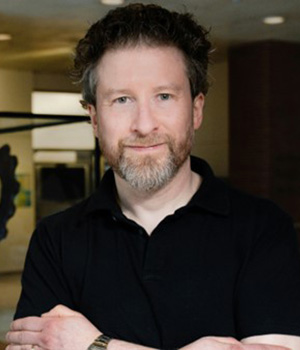
Development and optimization of mineral processing technologies—from mine to recycling facility
Université Laval
Conference details
Led by Professor Claude Bazin, Axis 3 of Université Laval’s E4m Research Centre focuses on developing and optimizing eco-responsible mineral processing methods, covering the entire value chain from primary extraction to recycling and the circular economy.
Research is structured around four complementary themes:
-
Comminution: Modelling and energy optimization of crushing and grinding (particularly HPGR technologies) to drastically reduce electricity consumption at mine sites.
-
Beneficiation: Physical, physicochemical (flotation), and hydrometallurgical separation to maximize the recovery of critical minerals (such as gold, lithium, rare earths, and cobalt) while valorizing tailings and recycling.
-
Optimization: Utilizing computational molecular simulation (DFT), digital twins, and predictive control algorithms to stabilize and optimize plant yields in real time.
-
Intensification and Chemical Looping: Transitioning to low-carbon processes by integrating forest biomass to replace fossil reagents and developing hybrid processes that combine CO2 capture and mineralization.
To validate their innovations, Axis 3 researchers rely on state-of-the-art infrastructure, including the Process Operations Optimization Laboratory (LOOP) and the Vision and Numerical Systems Laboratory (LVSN). They collaborate closely with major industrial partners (Agnico Eagle, Rio Tinto, Glencore, COREM) and government agencies to accelerate technology transfer and secure critical mineral sovereignty.
1:40 p.m.
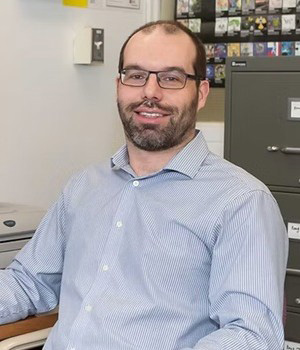
Regional- to Deposit-Scale Studies Supporting Mineral Exploration: Examples from the Gaspe Peninsula and the Val-d’Or District

Université Laval
Conference details
This presentation illustrates how academic research can help improve mineral exploration efficiency at different scales. The first example focuses on the Gaspe Peninsula, where our recent work at the regional scale highlighted the existence of two distinct metallogenic cycles formed over a period of approximately 30 Ma. These cycles are associated with intrusions showing different geochemical signatures and contrasting potential for porphyry- and skarn-type copper mineralization.
The second example concerns the Val-d’Or area and highlights recent advances by our research group regarding the use of the chemical composition of alteration minerals as a vectoring tool for orogenic gold deposits. This work demonstrates how academic research can generate practical tools to guide and optimize mineral exploration efforts.
2 p.m.
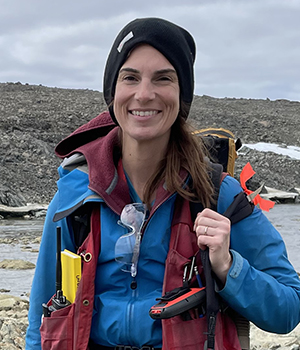
ULaval – MRNF – Glencore (Raglan Mine) – NSERC Alliance Strategic Partnership: Metallogeny of the Ni-Cu-Co-PGE Deposits of the Ungava Orogen, Nunavik, Quebec
Conference details
To meet energy needs with a view to reducing carbon emissions, renewable technologies, such as electric vehicles, must be further developed to limit the use of fossil fuels. However, these technologies require rare metals that are currently not extracted in sufficient quantities. Demand for Ni and Co is increasing significantly due to their use in rechargeable batteries for electric vehicles and other electronic devices. Worldwide, magmatic sulphide deposits represent the main source of high-grade Ni, Co and PGE. Quebec is home to several magmatic Ni-Cu-Co-PGE deposits, in particular those in the world-class Raglan district (100 Mt), located in the Cape Smith Belt, which extends over a distance of 360 km in Québec’s Far North (Nunavik). This belt also contains the Expo mine and possesses significant potential for additional resources. The discovery of mineral resources requires an in-depth understanding of the geological, physical, and chemical processes that led to their concentration at grades sufficient to make them economically viable to extract. With funding from the Natural Sciences and Engineering Research Council of Canada–Alliance Mission and logistical support from the MRNF and Raglan Mine, a research program was established to better understand the geological processes controlling high-grade nickel, copper, and cobalt concentration in magmatic sulphide deposits. These metals remain difficult to locate, as it is necessary to determine where and when the assimilation of sulphide-rich sedimentary rocks (which triggers ore formation through sulphide saturation) occurred within the Earth’s crust. This presentation will provide an overview of research work conducted in the region between 2021 and 2026.
2:50 p.m.
Design of Mining Works and Operations: Towards Resilient and Sustainable Infrastructure

Conference details
Axis 2 of the E4m research centre at Université Laval focuses on the engineering, design and optimization of mine structures. Drawing on leading-edge expertise in rock mechanics, mining geotechnics and northern engineering, this work aims to develop high-performance, safe infrastructure adapted to environmental realities.
Research is structured around two main themes, broken down into four fields of action:
Mining geomechanics (Theme 1): Characterization, modelling and optimization of excavations and mine structures.
Infrastructure and waste management (Theme 2): Design, monitoring and operation of mining waste management infrastructure.
Mining transportation networks: Applied road geotechnics (unpaved roads, off-highway haulage, airports) to combine logistical efficiency with a reduced environmental footprint.
Northern engineering and permafrost: Geotechnical adaptation of infrastructure to climate challenges to ensure sustainable development of mining projects in northern environments.
Axis 2 researchers collaborate closely with the mining industry, engineering firms and communities to ensure the rollout of robust projects.
3:15 p.m.
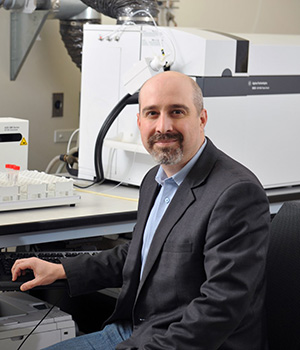
Responsible Development of Mineral Resources: Science, Innovation, and Sustainability
Conference details
The exploitation of mineral resources is essential to the energy transition and economic development, but it must be pursued within a framework of environmental and social sustainability. This presentation will highlight Research Axis 4 of the Centre for Research on Geology and Mineral Engineering (E4m), which focuses on the environmentally responsible development of mineral resources. This axis brings together a multidisciplinary team of researchers working to design innovative solutions aimed at reducing the environmental footprint of mining activities throughout the entire mine life cycle.
The research activities conducted within this axis address a broad range of challenges related to the sustainable management of mineral resources, the understanding of natural and industrial systems, and the reduction of environmental impacts associated with extractive activities. These efforts rely on integrated approaches that combine characterization, modelling, technological development, and resource valorization. The work also seeks to support the transition toward lower-carbon processes, promote circular economy principles, and strengthen the resilience of communities and territories in the face of current and future environmental challenges. Selected recent achievements and research projects will be presented to illustrate the diversity of expertise involved and the tangible outcomes of the research carried out within the axis.
By combining scientific expertise, technological innovation, and an integrated approach to environmental management, E4m’s Axis 4 contributes to the development of more responsible mining practices and supports progress toward decarbonization and sustainable development objectives.