


Mine operators face numerous and varied technical challenges. Sometimes, responding to these challenges involves relying on established best practices in mining engineering. Other times, it requires drawing on the strong sense of innovation among professionals working in engineering, technology, research, or manufacturing. The presentations delivered during this session will address operational and production challenges in both surface and underground mining, as well as innovative solution pathways to meet these challenges.
Back to program
![]()

Mines
Challenges and Innovation in Surface and Underground Mining
Tuesday, November 17, 2026
Room 309A


9:30 a.m.
Welcome Address
9:30 a.m.
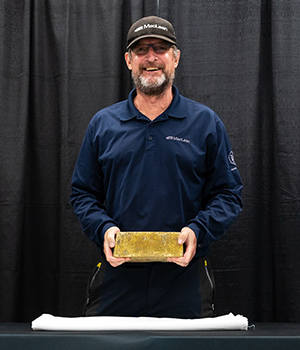
Battery Electric Vehicles (BEVs), MacLean Footprint for the Mining Industry

Conference details
The presentation focuses on the challenges and innovations associated with both surface and underground mining, with a particular emphasis on the electrification of MacLean's mining equipment. It outlines the company's evolution, its range of underground mining equipment, and the key milestones of its Battery Electric Vehicle (BEV) program, which now includes more than 120 units operating at over 25 mine sites.
The presentation then explains the core design principles behind BEVs, total cost of ownership, battery technology evolution, and charging strategies. It also addresses connectivity, CANbus controls, telemetry, and automation. Finally, it highlights the potential benefits in terms of safety, battery life, and operating costs, while emphasizing the importance of interoperability between different equipment types and systems to support more automated and productive mining operations.
9:55 a.m.
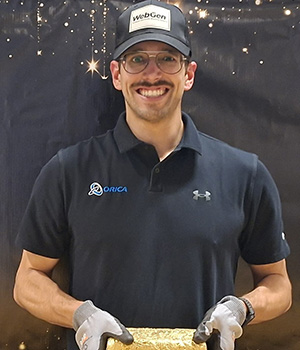
WebGen™ 200 – Wireless Initiation System for Enhanced Safety in Longhole Stope Recovery
Orica
Conference details
Orica’s WebGen™ is the world’s first wireless initiation system and has fundamentally changed the way blasting is approached. During this presentation, a brief introduction to the WebGen™ wireless initiation system will be provided. This will be followed by a practical application of the system through a case study on the safe improvement of longhole stope recovery at the Éléonore Mine – Dhilmar sector.
10:30 a.m.
Towards low-carbon mine heating for northern and Arctic mines

Conference details
Heating ventilation air is one of the most important energy needs of underground mines located in northern climates and is a major source of greenhouse gas (GHG) emissions. In order to reduce the dependence on fossil fuels used for mining air heating, Glacies and B2Gold are collaborating on the development of a low-carbon heating technology based on a Spray Freeze Heating (SFH) process. This new technology uses the energy released when water changes to ice to electrify air heating. The process also makes it possible to recover low-temperature waste heat and paves the way for new thermal management strategies for underground mines, particularly for air conditioning and fog reduction in mining infrastructure.
During the winter of 2025–2026, Glacies operated a 15,000 SCFM pilot unit in Sherbrooke, Québec, to validate the thermal performance, control strategies and GHG emission reduction potential of the process in real-world winter conditions. The presentation will focus on the measured results of the pilot, the principles of scaling to industrial mine ventilation systems, as well as the main technical and operational learnings from the deployment. The prospects for integrating this technology into northern and Arctic mining operations, including B2Gold’s Goose project in Nunavut, will also be discussed.
10:55 a.m.
Cut-Off Grade Calculation: Challenges, Opportunities, and Best Practices

Conference details
Cut-off grade is a fundamental parameter in the evaluation and optimization of mining projects. Despite its apparent simplicity, its calculation varies depending on the assumptions adopted, particularly with respect to mining costs, dilution, and mining recovery. Inconsistencies between the parameters used to establish the cut-off grade and those subsequently applied during optimization or economic evaluation can influence the selection of mineralized tonnes, estimated reserves, and ultimately the value of the project.
This presentation examines the key challenges associated with the calculation and application of cut-off grades in the context of underground stope optimization. Drawing on a focused literature review and practical case studies, it illustrates how different approaches can affect tonne selection and economic outcomes. Particular attention will be given to dilution and mining recovery.
For example, mining costs may be expressed on either an in situ tonne basis or a diluted tonne basis, directly affecting the calculated cut-off grade. Incorporating dilution or mining recovery at this stage may also exclude certain tonnes from the optimization process. When these same factors are subsequently applied during stope design or mine planning, the risk of accounting for some effects more than once must be carefully evaluated.
The presentation therefore proposes a framework for improving the consistency, transparency, and robustness of mining studies and the decisions that result from them.
11:20 a.m.
Future Vision for the Mining Industry: The Transformative Potential of Optics and Photonics

Conference details
The mining industry faces constant challenges to optimize operations, improve safety and reduce its environmental footprint. Optics-photonics, the science of light, offers a range of innovative solutions to meet these challenges. This presentation explores various advanced imaging modalities based on documented application cases and results obtained in the field and in the laboratory.
Through concrete examples from deployments and projects carried out with our partners, we will illustrate how these technologies are applied to mineral detection and identification, automated infrastructure inspection and process automation. Particular attention will be paid to sensor fusion and artificial intelligence, which transform these modalities into deployable decision-making tools. The goal is to spark discussions and stimulate interest from mining industry players, paving the way for future collaborations and the integration of these cutting-edge technologies into their operations.