


This session will present the results of five of the 20 research projects funded in 2021 by the MRNF. These projects focus on the design of open-pit mine slopes, the development of an intelligent body antenna system for deep underground mines, the production of lithium-ion battery-grade graphite, the development of critical and strategic minerals (CSMs) and the recovery of mine tailings. The research program aims to encourage researchers working in a variety of disciplines to help the mining industry meet the technical, environmental and technological challenges posed by Quebec’s geological context. This session is offered jointly by the Ministry of Natural Resources and Forestry (MRNF) and the Quebec Research Fund (FRQ), Nature and Technologies sector.
Results of the MRNF-FRQ Research Program on Sustainable Development in the Mining Sector
Thursday, November 20, 2025
Room 304AB – SOQUEM



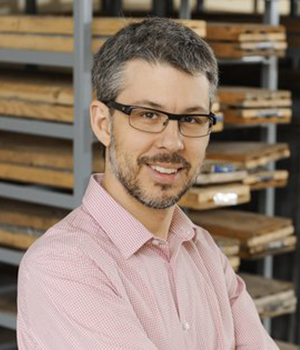
The overall objective of this research project was to develop a global, practical and integrated methodology for the design, optimization and performance analysis of bench face angles (BFAs) and inter-ramp angles (IRAs) in the context of open-pit mining using LiDAR data. This work should make it possible to improve worker safety and maximize the profitability of operations, while ensuring the training of highly qualified personnel (HQP) required by the industry.
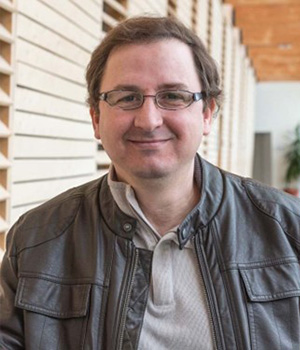
Underground mining is now reaching unprecedented depths in order to meet the global minerals supply crisis of the 21st century. This development exposes miners to extremely hostile environmental conditions, characterized by high temperatures and humidity that compromise their health and safety. In addition, the excavation of deep shafts and long galleries increases the risks of collapse, fire, explosion and air quality deterioration due to the presence of noxious and toxic agents. In such a context, rescue operations become very risky without accurate and reliable detection of environmental parameters. The development of advanced technologies to improve safety, particularly those involving surveillance and detection, is therefore a priority.
Among the emerging approaches, Wireless Body Area Networks (WBANs) are attracting growing interest. These networks are based on sensors and actuators placed on or near the human body, enabling vital and environmental data to be collected and transmitted in real time. In a mining context, WBANs can locate workers in the event of an emergency and transmit information such as heart rate, ambient temperature or toxic gas concentrations to a command centre on the surface. However, these networks generate large volumes of data that require high-performance communication technologies. The integration of 5G networks represents a solution adapted to the requirements of reliability and speed in deep mines. The aim of this project is to design a new generation of intelligent portable antennas optimized for WBANs, in order to improve the safety, efficiency and profitability of mining operations.
9:55 a.m.
Graphite Production - Mine 4.0 and Geometallurgy: Minimizing the Risks Associated With the Production of Lithium-Ion Battery-Grade Graphite

Centre E4m, Université Laval
Graphite occupies a central place in the Québec Plan for the Development of Critical and Strategic Minerals 2020-2025. The manufacture of batteries to store clean energy relies on this material, which is used in the composition of anodes. In this context, Nouveau Monde Graphite (NMG) is developing the Matawinie mining project, which is expected to start production soon.
NMG has been able to develop an economically viable process based on laboratory and demonstration plant trials. However, geometallurgical variability poses a considerable risk for this type of project. The resulting heterogeneity of ore characteristics exposes the future plant to fluctuations in performance, operating costs and revenues that could compromise its profitability.
Digital technologies offer considerable potential for dealing with this risk upstream and on an ongoing basis during production. Among these, phenomenological simulation and process control form the core around which a proposal can be built to make the mineralurgical aspect of Mine 4.0 a reality.
The presentation will focus on some recent developments carried out at Université Laval's E4m Centre as part of a research program in partnership with NMG. In particular, it will explain how the grinding circuit simulation model and the particle size control system work. The results will show the simulator's ability to reproduce the behaviour of the plant and the performance of the controller.
10:20 a.m.
Break
10:35 a.m.
Covalorization of Critical and Strategic Minerals From the Iron-Titanium Industry in Québec

IRME-UQAT
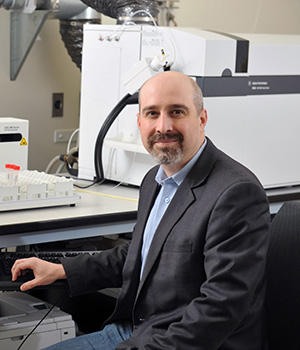
The mining industry helps to ensure the availability of mineral resources that are essential to the development of our society. The iron-titanium (Fe-Ti) sector, which is firmly established in Québec, produces titanium slag used as a raw material in the manufacture of titanium dioxide pigment (TiO₂), an essential compound in the paint, plastics, paper and cosmetics industries. This industry also enables the production of high-purity steel used in specialized applications. Thanks to integrated industrial facilities, Québec is distinguished by a complete value chain from ore extraction to local production of TiO₂ and steel, thereby strengthening its mineral sovereignty and its contribution to the circular economy. However, the processing and transformation of ilmenite/apatite ore can also produce certain critical and strategic minerals (CSMs) in different streams, which are not currently recovered. Among these CSMs are rare earth elements (REE) and phosphorus found in a fluorapatite concentrate, as well as titanium (Ti) found in an unmarketable sodium titanate tailings. The aim of this project is to study the selective recovery of value-added elements found in these concentrates or non-marketable by-products from the Fe-Ti sector in Québec. The project is divided into two lines of research: 1) covalorization of the P and REE present in the apatite concentrate; and ii) reprocessing of sodium titanate by-products to remove some impurities. The results show that covalorization of the REE and P contained in the apatite concentrate by the sulphuric or hydrochloric route is challenging and requires compromises in terms of recovery and/or purity of the final co-product. In the case of sodium titanate, leaching in a sulphuric medium is effective (100% Th and Ti), but non-selective, and requires the use of resins to selectively sorb Th (40 to 60%) compared with Ti (20 to 40%).
11 a.m.
Supporting the Ecological Transition through the Valorization of Mining Residues

The presentation will showcase the results obtained from a research project that aimed to develop a green process for the simultaneous valorization of industrial CO₂ (originating mainly from cement plants) and silica-rich mining residues derived from the ECO₂ Magnesia process. This process targets the production of sodium carbonates and value-added silica compounds. The work focused on characterizing the reactivity of materials, determining reaction rates, studying thermodynamic equilibria, and analyzing the purity of the obtained products.
In parallel, an exergy analysis method was developed to identify energy inefficiencies in industrial processes and to propose improvement strategies aimed at reducing energy consumption and greenhouse gas emissions.
These efforts were part of a broader circular economy and sustainable development approach, seeking to transform industrial waste into useful resources, strengthen environmental practices within the mining sector, and support the training of two students (one Ph.D. and one M.Sc.) within a multidisciplinary research team in collaboration with Sigma Devtech.
11:30 a.m.