


This session will highlight concrete initiatives designed to operationalize decarbonization at the local and regional levels. It will showcase projects and approaches aimed at developing regional energy ecosystems. Thanks to their presence across Quebec, the Escouade Énergie and RQEI are well positioned to identify real needs and support innovation.
Back to program
![]()
![]()
Energy
Developing Co-Constructed Regional Energy Ecosystems: How to Strengthen Local Ownership of Energy Projects
Tuesday, November 17, 2026

9:30 a.m.
Welcome Address
9:45 a.m.
From Grey to Green: Thetford, Transforming Its Mining Legacy into a Driver of Innovation
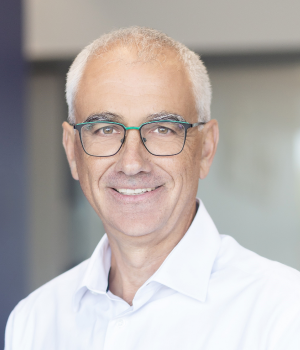
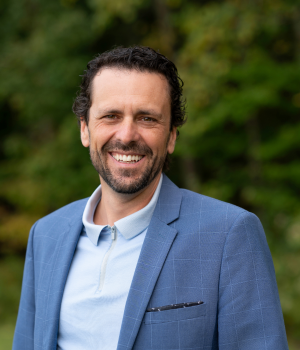
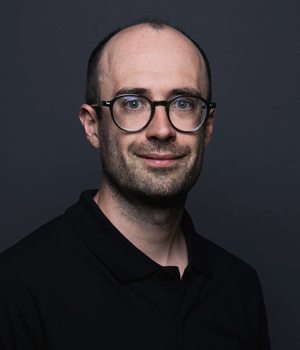
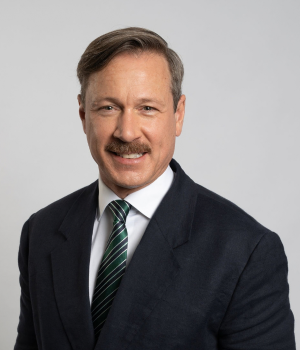
Société de développement économique de la région de Thetford
Conference details
How can a region transform its unique characteristics, and even its historical constraints, into new opportunities for development?
The Thetford region provides a compelling example of this transformation through DuGrisAuVert, a circular economy initiative presented by Ludovic Beauregard that builds on the region’s distinctive assets to support economic development.
Asbestos mining residues, ophiolite-rich geology, significant water reserves in flooded former mine pits, former mining sites, infrastructure, and above all, a community mobilized around the future of its region represent valuable resources that can become powerful drivers of transformation.
This momentum is also supported by a regional applied research and innovation ecosystem, presented by Philippe Bébin, which includes COALIA, Kemitek and Cégep de Thetford. This ecosystem helps foster and support technology projects across a range of sectors related to the energy transition and resource valorization.
The panel will also feature Florian Osselin, who will present VEMA’s hydrogen production project, and Mathieu Bouchard, who will discuss Deep Sky’s CO2 sequestration project. These initiatives are part of a broader portfolio of projects involving critical and strategic minerals, mining residue valorization, and CO2 capture, sequestration and mineralization.
Moderated by Marc-André St-Yves, representing the Vallée de la transition énergétique Innovation Zone, the panel will also highlight the importance of collaboration between regional innovation ecosystems. The Thetford region works closely with the VTE and ZIM Innovation Zones, leveraging complementary expertise and infrastructure. These collaborations connect regional strengths, accelerate technological advances and support the path from innovation to market, ultimately contributing to Québec’s economy.
Conference details
Nicholas Berrouard will present Espace MCS+ as a concrete case study to explore the role of infrastructure in building an innovation ecosystem, including technology scale-up, technology risk reduction, skills development, and complementarity with the private sector.
Located in the heart of Shawinigan, within the Vallée de la Transition Énergétique, this new initiative will demonstrate how shared infrastructure, expertise, and demonstration capabilities can help accelerate the transition from innovation to industrial application and strengthen a region’s capacity to generate lasting economic and sustainable benefits.
11 a.m.
From Technology to Territory: Creating the Conditions for a Sustainable Industrial Transition

Conference details
How can we create the territorial, institutional, and scientific conditions needed for decarbonization projects to gain local adoption and generate lasting value for communities?
Drawing on the case of Deschambault-Grondines, this panel will explore the transformation of a large-scale industrial park into an eco-industrial model, where the aluminum and renewable energy sectors, particularly bioenergy, are leveraged to foster industrial synergies.
Younès Bareha, Chief Scientific Advisor to the Municipality of Deschambault-Grondines, will provide a technical perspective on the industrial decarbonization solutions and processes being implemented locally, addressing both implementation challenges and measurable environmental benefits.
Kim Cornelissen, Senior Consultant in Eco-Industrial Development, will examine the project from a territorial and ecosystem perspective: How can the right conditions be created for collaboration among municipalities, industry, and research organizations to enable these initiatives to emerge, take shape, and become firmly rooted within their communities? Examples from international industrial parks will also provide additional perspectives and insights.
The panel will be moderated by Simon Barnabé, Professor at UQTR and Chief Scientific Advisor to the City of Victoriaville. Working at the intersection of research, municipal development, and innovation ecosystem building, he will bring together technological, scientific, municipal, and economic perspectives to identify the conditions needed to move from a technological solution to a true territorial project, co-developed with local stakeholders, capable of mobilizing the community and creating lasting value.